Hydrogen Cars in Europe: Where Can You Still Refuel?
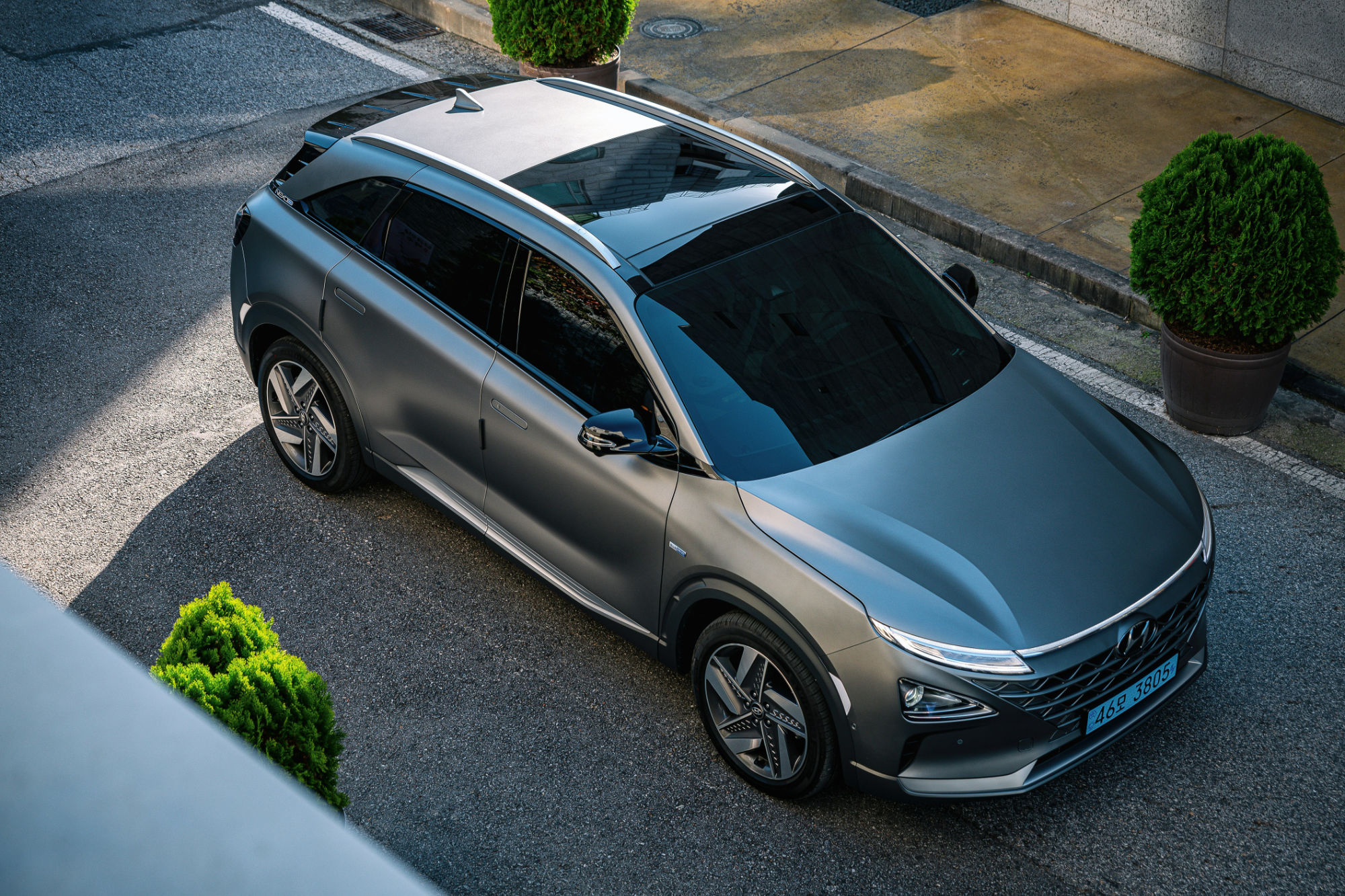
Hydrogen fuel-cell electric vehicles (FCEVs) have long been seen as a promising route to zero-emission driving. They combine the quick refuelling of a petrol car with the clean drive of an electric car. But the most important question for anyone considering one is simple: where can you actually refuel? And right now, the honest answer is that the network for passenger cars is shrinking, not growing.
The current landscape
Europe has roughly 180 public hydrogen stations, and that total has barely changed since 2023. What has changed is who they serve. Operators are converting and replacing car-focused stations with high-capacity sites for buses and trucks. The number of stations that only offer 700-bar hydrogen (the pressure passenger cars need) fell from 108 in 2023 to 32 by May 2026. Most remaining stations now offer both 350 bar (for heavy vehicles) and 700 bar.
The car market is small too. Only two fuel-cell models are on sale in Europe, the Toyota Mirai and the new Hyundai Nexo, and sales are tiny: Toyota sold just one hydrogen car in the Netherlands in 2025.
Germany: still the backbone, but much smaller
Germany still has Europe's largest network, but it has shrunk fast. In January 2026 operator H2 Mobility counted around 50 public stations, down from more than 80 two years earlier. In 2025 alone it closed 22 older car-focused stations, and another 14 followed at the end of the year. Cities such as Bonn, Flensburg, Ulm and Aachen lost their only public hydrogen station.
Of the remaining stations, most offer both 350 and 700 bar, and a handful offer 700 bar only. Germany is still the easiest country in Europe to own a hydrogen car, but you need to plan around a much thinner network than a few years ago.
Austria, Denmark and the UK: public car refuelling has largely gone
Several countries that were early movers have effectively stopped public hydrogen refuelling for cars. In Austria, OMV closed all four of its public stations (Vienna, Graz, Innsbruck and Asten) by September 2025. In Denmark, Everfuel closed its public stations in 2023, and in the UK, Shell closed its hydrogen stations in 2022. In these countries a hydrogen car is not a practical option for private drivers.
France, the Netherlands and Switzerland: regional clusters
France's hydrogen activity is concentrated around Paris, where hydrogen taxi fleets use a network of dedicated stations. The Netherlands has stations mainly in the Randstad and other urban areas, and Switzerland has a compact network near its main cities and transit routes. In all three, coverage is good enough for some local driving, but long trips need careful planning. Always check live availability before you set off.
Southern and Eastern Europe: first steps
Countries such as Italy, Spain and Portugal have very few public stations, often linked to pilot projects or bus depots. In Eastern Europe, Poland is building new stations with EU support, including 16 sites that will offer both 350 and 700 bar. For private drivers, everyday use is not yet realistic in these regions.
EU policy: AFIR and the 2030 target
Under the EU's Alternative Fuels Infrastructure Regulation (AFIR), public hydrogen stations must be available at least every 200 kilometres along the core Trans-European Transport Network (TEN-T) by the end of 2030, as well as in urban nodes. Each corridor station must deliver at least one tonne of hydrogen per day and have at least one 700-bar dispenser.
That should eventually give car drivers a predictable network again, but these stations are designed mainly for trucks. Until then, coverage for cars will stay patchy.
Which cars can you buy?
- Hyundai Nexo (new generation): orders opened in Germany in January 2026, priced from €69,900. WLTP range is up to 826 km with a 6.69 kg tank.
- Toyota Mirai: still on sale, but in very small numbers.
- BMW iX5 Hydrogen: BMW plans to bring its first series-production fuel-cell car to market in 2028.
Costs and consumption
Hydrogen is sold by the kilogram. A modern fuel-cell car uses roughly 0.8 to 1 kg per 100 km, so the price per kilogram is roughly what you pay per 100 km. Prices differ by station and country, so check the current price in a station app before you fill up. In most cases driving on hydrogen costs more per kilometre than charging a battery-electric car.
Practical tips for hydrogen drivers
- Check stations in real time. Use an app such as H2.LIVE to confirm a station is open and has 700-bar hydrogen.
- Always have a backup. With so few stations, keep one or two alternatives in mind on every longer trip.
- Watch the pressure. Cars need 700 bar; some stations only serve 350 bar for buses and trucks.
- Live near a cluster. A hydrogen car only makes sense if a reliable station is close to where you live or work.
Conclusion
Hydrogen cars work well, refuel in minutes and drive smoothly. But for private drivers in Europe the network is getting thinner, not denser, as operators shift their focus to trucks and buses. Germany and a few regional clusters in France, the Netherlands and Switzerland remain usable with careful planning; elsewhere, a hydrogen car is hard to recommend.
If you are an enthusiast with a reliable station nearby, a hydrogen car can still be a rewarding choice. For most drivers, a battery-electric car is the more practical option today, and the EU's 2030 hydrogen targets will mainly benefit heavy transport.
You should also read:
Why Germany Has No Speed Limit (and Where That’s Changing)
Few countries in the world are as famous for their roads as Germany. When travelers hear about the German Autobahn, one fact usually comes to mind first: there is no general speed limit. Drivers from across the globe dream of hitting the gas pedal and…
Continue reading...
Road Safety in Europe: Things to Know Before You Drive
Driving in Europe can be one of the most rewarding experiences for travelers. From the winding coastal roads of Italy to the high-speed motorways of Germany, the continent offers incredible diversity. Yet, before setting off, it is essential to understand the fundamentals of road safety…
Continue reading...
Automatic vs Manual Car Rentals in Europe: What Tourists Should Know
When planning a road trip in Europe, renting a car is one of the best ways to explore cities, countryside, and hidden gems that trains and buses don’t reach. But before you confirm your booking, you’ll face a question that surprises many visitors from outside…
Continue reading...